

Written for homeowners, caregivers, and families making a real decision — not a rushed one. This guide covers everything that actually matters: layout, size, stability, water control, and long-term usability.
In This Guide
Why Roll In Showers Are the Smart "Future-Proof" Upgrade
Most people wait until they need an accessible shower. The problem is that waiting creates stress, rushed decisions, and sometimes a contractor who doesn't fully understand accessibility design. A roll in shower installed proactively supports comfort today and genuine flexibility later — without looking like a clinical retrofit.
Modern roll in showers are curbless or low-threshold. That clean entry also makes bathrooms feel larger, reduces cleaning effort, and fits comfortably into current design trends. They appeal to older adults planning to stay in their home, families caring for parents, younger homeowners who want multigenerational flexibility, and frankly anyone who prefers a smart, open shower over a tub they have to climb into.
Who benefits most
For a broader overview of shower types and options, see our main handicap showers page. If you are still comparing showers and soaking options, bookmark the walk in tub guide as well.
Roll In Showers vs. Walk In Tubs: How to Choose
Both options support aging in place. The difference comes down to daily routine and personal preference — not which one is "better."
Roll In Showers are often best when you want
Walk In Tubs are often best when you want
What "ADA" Actually Means for Roll In Showers
"ADA roll in shower" is one of the most searched phrases in this category. The important thing to understand: ADA standards are design guidelines for accessibility — not a medical requirement, and not a guarantee that any shower will work for every individual. Requirements also vary between commercial facilities and private homes.
That said, understanding the core principles helps enormously when planning. ADA shower guidance focuses on:
Roll In Shower Sizes: What They Mean in Real Bathrooms
Size is the most searched topic in this category — and the most important buying decision. People want to know if the shower will fit their bathroom. They also want to know if it will remain usable as needs change. Here are the most common configurations in 2026:
| Size | Best Fit | Why It Matters |
|---|---|---|
| 60 × 30 | Compact roll-in layouts | Referenced in ADA roll-in guidance; fits tight alcoves |
| 60 × 36 | Most homes — everyday comfort | Extra width improves movement & caregiver space; the "sweet spot" |
| 60 × 48 | Wheelchair-friendly families | More stable turning & positioning; significantly more flexibility |
| 72 × 48 | Maximum flexibility builds | Supports wide movement, bench seating & future adaptations |
Flexibility by Size
Larger showers provide more positioning options and are easier to adapt later as needs change.
Roll-In vs. Alternate Roll-In vs. Transfer Showers
Accessibility planning describes three main shower configurations. You don't need to memorize the terminology, but understanding the concept affects layout decisions.
Roll-In Shower
Designed for wheelchair entry without requiring a transfer to a seat. Prioritizes open, clear entry and floor space.
Alternate Roll-In
A common configuration that shifts width and depth to support different clearances. Useful when bathroom geometry is irregular.
Transfer Shower
Designed for users who move from a wheelchair to a built-in seat. Can be smaller — but relies on specific seat placement and clearances.
Threshold Options: True Barrier-Free vs. Low-Threshold
A true barrier-free (curbless) shower has absolutely no step. The floor transitions smoothly from bathroom to shower. This is ideal for wheelchairs and walkers — but water management must be engineered correctly, or you'll have a very wet bathroom floor.
A low-threshold pan has a small beveled entry — typically under an inch. This is still dramatically easier than a traditional curb, and it often provides better water containment without requiring structural changes. It's the most popular choice in real residential installs for good reason.
Drain Styles: Center, End, and Trench
Drain placement affects the slope of the pan and the movement of water. It also influences the visual style of the finished shower. Here's how they compare:
Center Drain
Common, simple, cost-effective. Pan slopes inward from all sides. Works in virtually any layout.
End Drain
Slope moves in one direction. Can feel more stable underfoot. Good for alcove-style showers.
Trench Drain
Handles high flow and wider openings. Ideal for curbless designs. Modern, architectural look.
Note: Proper installation matters far more than drain style. A well-built center drain performs beautifully in any well-sloped shower.
Surface Traction: Slip Resistance Without the Industrial Look
Traction matters for everyone — not just older adults. Wet feet plus soap is a universal hazard. Today's roll-in shower pans include built-in texture and matte finishes that deliver real grip without looking like a hospital floor.
If your build includes tile, choose a tile rated for wet areas. Matte or honed finishes outperform glossy surfaces on the shower floor — gloss looks beautiful on walls, but it can be dangerously slick underfoot when wet.
Seating: Built-In Benches, Fold-Down Seats, and Portable Options
Many homeowners avoid seating because they think it signals "disability." The reality is that modern shower seating looks premium when designed well — a tiled bench with a teak inset is a spa feature, not a medical one. Here's how the options compare:
Built-In Bench
Best for long-term stability and everyday use. Looks upscale when tiled. Supports caregiving scenarios.
Best overall
Fold-Down Seat
Great when space is tight. Folds flat when not needed. Keeps the floor open for standing use or wheelchair entry.
Best for small spaces
Portable Bench
A flexible interim solution. Can clutter the shower if not managed well. Better than nothing but not the long-term answer.
Short-term only
For a comfort upgrade, consider a custom shower seat cushion that pairs with a built-in bench.
Controls, Shower Heads & Grab Bars
Controls should be reachable from both inside and outside the water stream — so you can set the temperature before stepping in. A single-handle mixing valve keeps it simple. Thermostatic valves are worth considering if budget allows.
Shower heads: A handheld shower head on a slide bar is the single best upgrade you can make. It supports seated bathing, helps caregivers, and makes cleaning the shower itself dramatically easier. Many homeowners also add a fixed overhead head for convenience.
Grab bars do not need to look clinical. Today's styles match modern fixtures in brushed nickel, matte black, or polished chrome. What matters more than aesthetics is placement — bars should be positioned where people naturally brace themselves, and they must be anchored into wall studs or blocking. A grab bar anchored only into drywall is a liability, not a safety feature.
Real-World Layouts: What Actually Works in Homes
Most homeowners are not designing a commercial restroom. They're working with a real bathroom that has real constraints. Here are the three most common layout strategies:
Alcove Replacement
Replace a standard tub in the same 60" footprint. Often the fastest and most budget-friendly path. Works with a pre-built modular system.
Corner Expansion
Use an open corner to gain depth. Great for adding a built-in bench or 60×48 configuration without a full remodel.
Wet-Room Style
Fully open, modern, no enclosure. Requires excellent water management and waterproofing throughout. Maximum flexibility and aesthetic impact.
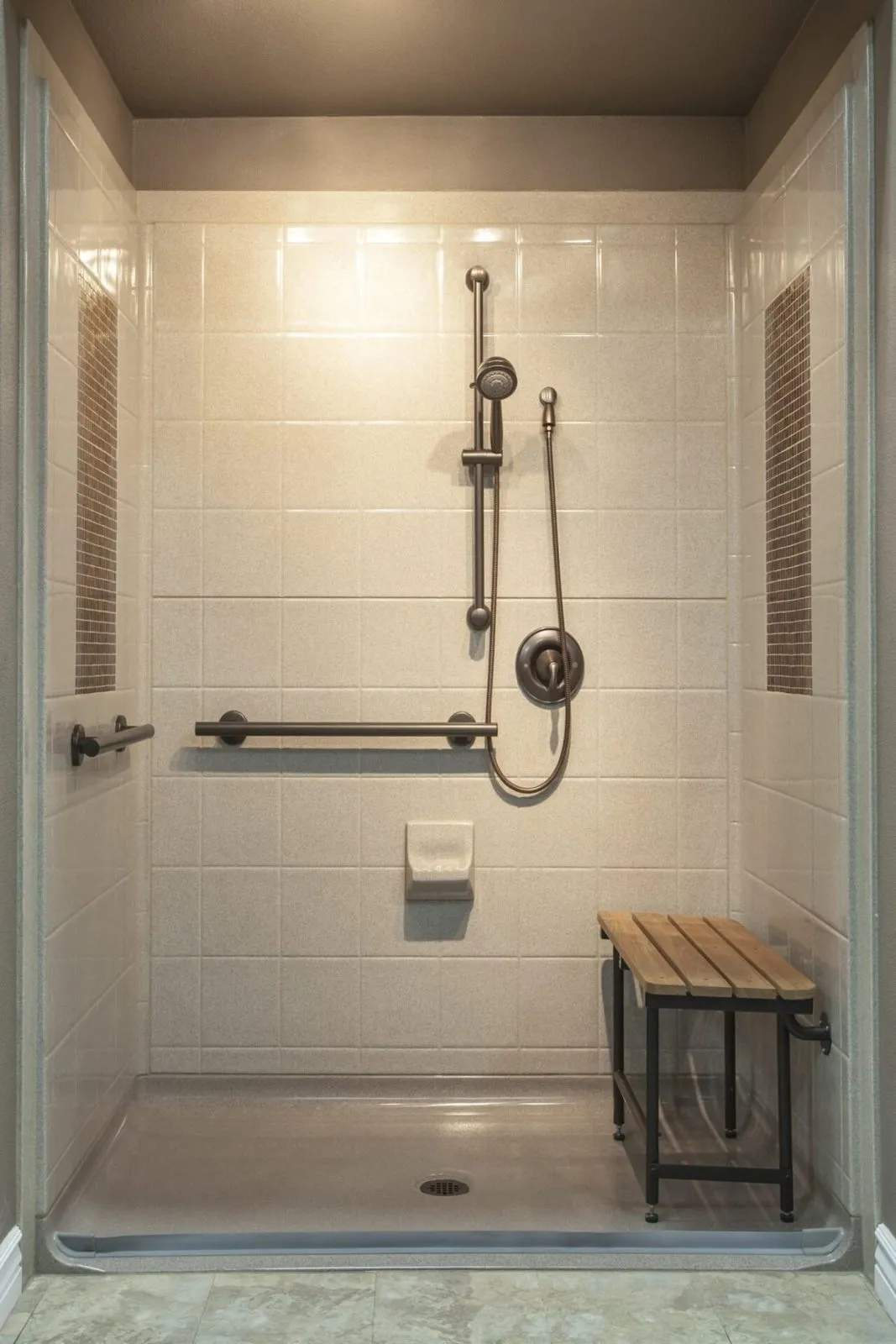
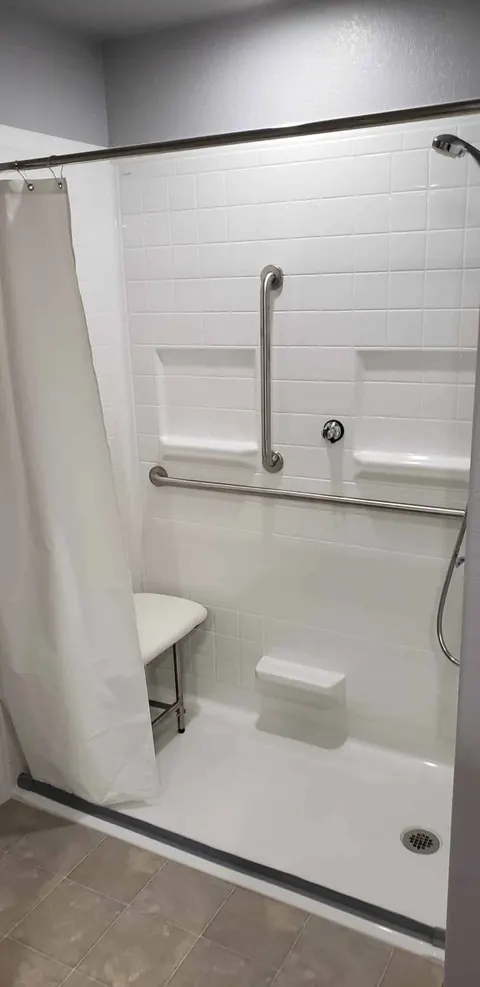
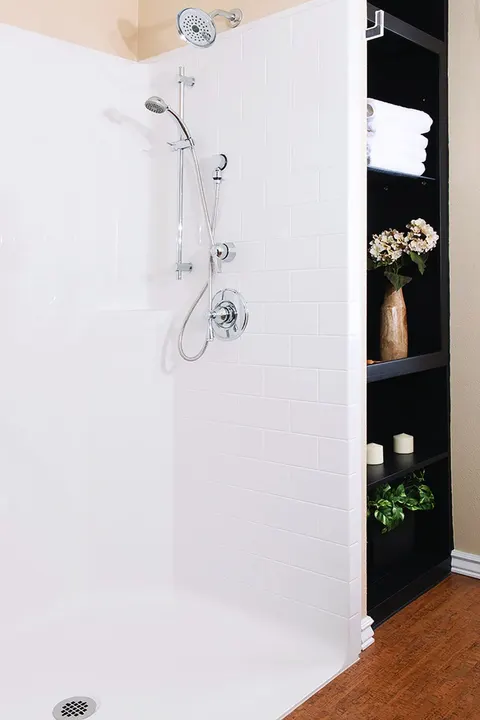
63 x 33 ADA Roll In Shower
View details →
60 x 30 Roll In Shower, Multi-Piece
View details →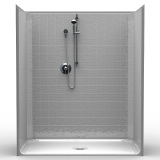
60 x 33 One-Piece, Low Threshold
View details →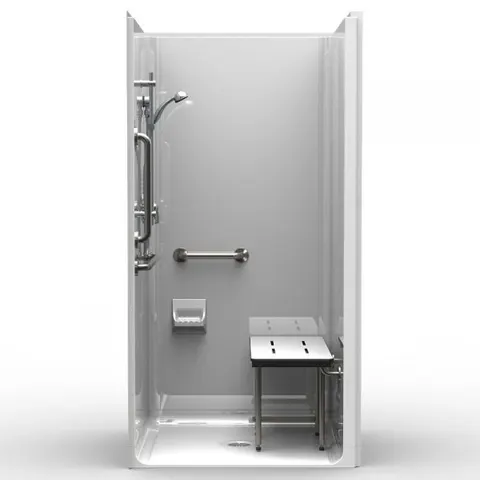
40 x 38 ADA Transfer Shower
View details →Roll In Shower Products from Aging Safely Baths
If you're ready to compare specific models, here are a few starting points based on the most common configurations:
60 × 33 Roll In Shower
Handicap Accessible Shower →
Compact alcove-friendly configuration
60 × 36 Roll In Shower
Most Popular Configuration →
The "sweet spot" for most home bathrooms
Browse the full selection on the handicap showers page, or explore shipped kit options on Showers4Less.
DIY-Friendly Kits from Showers4Less
Some homeowners prefer a full-package kit shipped to their door for a contractor or capable DIYer to install. These are some of the most-searched configurations:
Most Popular
60 × 36 Full Package →
Venetian Marble wall system
Wheelchair-Friendly
60 × 48 Package →
Grecian Earth wall system
Compact Option
42 × 36 Package →
Center drain, integrated soap dishes
Cost Reality: What Drives the Price Up or Down
There is no single number for roll in shower installation because scope varies dramatically. These are the factors that move the price most:
For a deeper look at unexpected project costs: Hidden Costs of Bathroom Remodeling for Aging in Place
What a roll in shower costs, in plain numbers
Many national brands run $25,000 to $30,000 for a fully installed walk in tub or roll in shower. We are nowhere near that.
Our options run from shower pans under $2,000 up to fully installed walk in tubs starting around $15,000. The final number moves with the installation, not with a sales pitch:
- Which walk in tub or shower you choose, and how customized you want it
- Do we need to widen a door or go through a wall?
- Do we run electrical for hydrotherapy jets or a heated seat?
- Is there a slab, a crawlspace or a basement under the floor?
Most of the time we come in well under $20,000 fully installed with a premium walk in tub or roll in shower and the customizations you want.
Installation Timelines: One Day vs. Full Remodel
"One day roll in shower" is one of the most searched phrases in this space — and for good reason. Some installations genuinely can be completed in a single day. But "one day" is conditional.
One-Day Install Is Likely When
Plan for More Time When
More on fast installs: Barrier Free Roll In Showers Installed in as Little as a Day
Water Containment: Keeping an Open Shower Where It Belongs
The most common concern about curbless showers is water migration. It's a real issue — and a solved one, when the design is done correctly. These elements work together to keep water contained:
A partial glass panel is often the ideal compromise — it preserves the modern open look while redirecting spray back into the shower zone effectively.
Cleaning and Maintenance: Why Roll In Showers Win Long-Term
Roll in showers are genuinely easier to maintain than traditional tubs — less bending, fewer hard-to-reach corners, and no grout-filled tub surround to scrub. Modular wall panels reduce grout lines dramatically. Textured pans rinse clean. Open layouts mean fewer accumulation zones for soap scum and mildew.
That said, tile has legitimate aesthetic advantages and can last a lifetime when maintained properly. If you choose tile walls, keep grout lines tighter and use an epoxy or penetrating sealer annually. If you want near-zero maintenance, a modular acrylic or composite wall system is the right call.
Ready to Find the Right Roll In Shower for Your Home?
No pressure. No obligation. Just real answers about layout, size, and installation options.
Decision Guide: Choosing the Right Configuration
Use this as a quick framework to match your situation to the right starting point:
| If you need… | Prioritize… | Starting Size |
|---|---|---|
| General aging in place upgrade | Low threshold, traction, handheld head | 60 × 36 |
| Wheelchair-friendly entry | Open layout, width, drainage clearances | 60 × 48 |
| Caregiver-assisted bathing | Wide entry, fold-down seat, grab bars on two walls | 60 × 48 |
| Maximum long-term flexibility | Space, bench, optional trench drain | 72 × 48 |
Related Resources
Design Trends
Future of Aging in Place: Multigenerational Bathroom Trends →
Perspective
The Quiet Confidence of Aging in Place →
Planning Tool
Aging in Place Bathroom Planner + 10-Year Checklist →
Durability
30-Year Warranty for Long-Term Peace of Mind →
Available Nationwide — Including These Key Markets
Frequently Asked Questions: Roll In Showers
20 questions answered by our accessible bathing specialists.
Get a Roll In Shower Plan That Fits Your Home
No guessing on sizes or layouts. Our specialists give you a fast, honest consultation — no high-pressure sales, just real guidance.
Worry-Free One-Day Installation Service Available Nationwide · DIY Drop-Ship Options Available