

Why the Bathroom Is the Most Dangerous Room in Your Home
Forget the stairs. Forget the front porch. The bathroom is where most seniors get hurt—and it's not even close.
The CDC confirms that 1 in 4 adults over 65 falls every year. But what most people don't realize is where those falls happen. Research from the National Institute on Aging shows that over 80% of falls that happen at home occur in the bathroom. That's not a coincidence. It's physics, aging, and bathroom design all colliding at once.
Wet tile, hard surfaces, tight corners, low toilet seats, and the need to step over a high tub ledge—these are hazards in any home. For someone with reduced balance, weaker legs, or medications that cause dizziness, they become genuinely dangerous. A peer-reviewed study found that bathroom falls are more than twice as likely to cause injury compared to a fall in the living room. Two-thirds of those injuries happen specifically during bathing or showering.
Where Senior Home Falls Happen
Sources: CDC, National Institute on Aging, 2024–2025
The stakes are very high. The CDC reports that 1.6 million older adults visit emergency departments each year for fall-related injuries. For seniors who fall and break a hip, research shows a 25% chance of dying within six months to a year. Beyond the physical toll, there's the emotional one—many seniors who experience a serious fall never fully regain their confidence at home.
The bathroom isn't just a hygiene space. It's a make-or-break room for aging in place.
What Actually Makes a Bathroom Dangerous for Seniors
Falls don't just happen because someone is clumsy. They happen because of a mismatch between a person's current physical abilities and the environment they're navigating.
Top Risk Factors for Senior Bathroom Falls
Composite risk assessment based on CDC, NIA, and peer-reviewed studies
Notice that three of the top four risk factors are structural problems. They have nothing to do with the person's health and everything to do with how the bathroom was built. The good news? Structural problems are fixable.
Key Insight
A 2020 U.S. Census Bureau report estimated that only 10% of American homes are "aging-ready." That leaves roughly 90% of homes needing some degree of modification for safe aging in place.
The Real Cost of Doing Nothing
Some families put off bathroom modifications because of the upfront expense. That's completely understandable. However, it's worth comparing the cost of a modification against the cost of what it prevents.
The average hospital stay following a hip fracture costs between $35,000 and $50,000. That doesn't include rehabilitation, physical therapy, or in-home care afterward. A walk-in tub or roll-in shower installation is a fraction of that—and it pays that dividend every single day.
Then there's the less tangible cost: losing independence. When a senior can no longer safely bathe without help, the decision about staying home often gets made for them. Moving to assisted living costs a national average of over $4,500 per month. The math is straightforward. Modifying your bathroom is one of the best investments a family can make.
"The bathroom is the most hazardous room in the house. With the right updates, you can transform it into a much safer environment."
— Neal K. Shah, CEO of CareYaya Health Technologies, via WTOP News
Walk-In Tubs vs. Roll-In Showers: Which One Is Right for You?
This is the question we hear most often. Honestly, there's no universal answer. The right choice depends on your mobility, your bathroom layout, your preferences, and sometimes your budget. Here's a straightforward comparison.
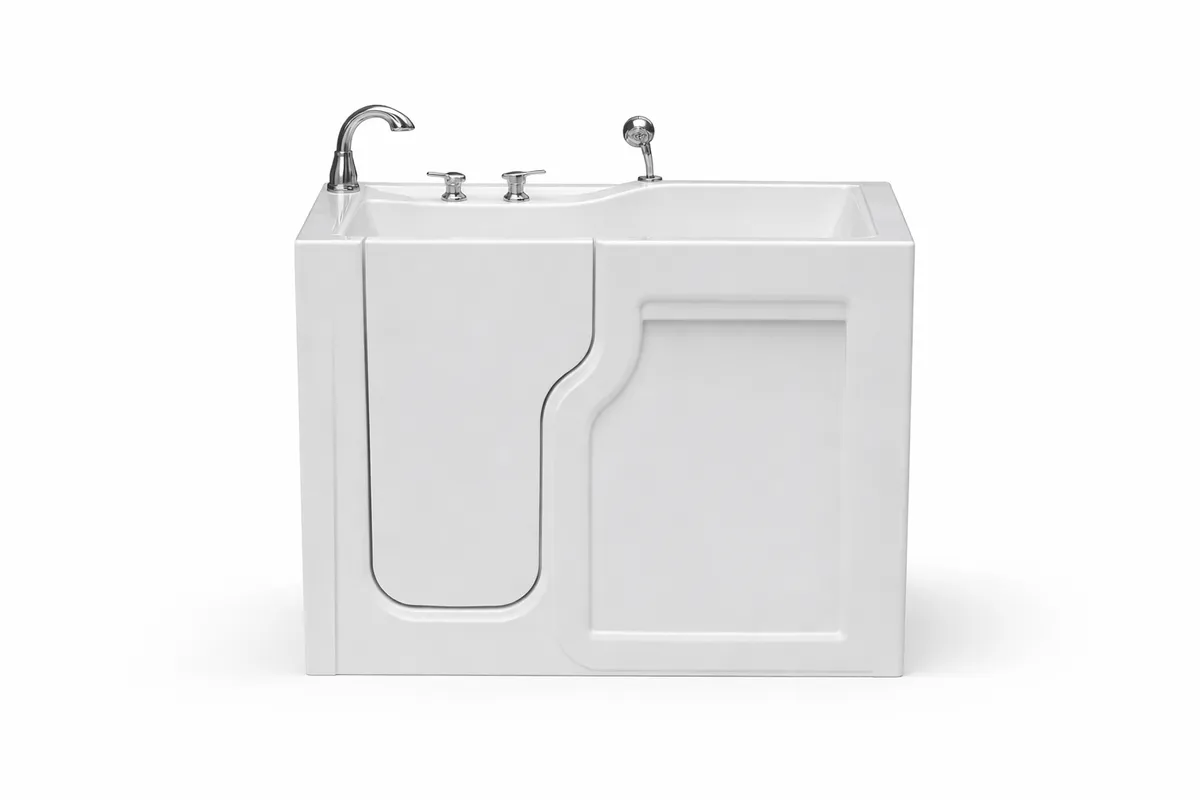
Walk-In Tub
For those who love a soak
- Low step-in threshold (typically 2–4 inches)
- Built-in seat—no need to lower to floor level
- Door seals watertight; fill after you're seated
- Hydrotherapy jets help with arthritis & circulation
- Great for limited standing endurance
- Often fits existing tub footprint—no full remodel
Roll-In Shower
For ease and accessibility
- Zero threshold entry—truly barrier-free
- Wheelchair and walker accessible
- Easiest to clean and maintain
- Faster daily routine for limited stamina
- Commonly covered under VA HISA grant
- Ideal when caregiver assistance is involved
Still not sure? That's exactly why we offer free consultations. Our team has helped thousands of families work through this decision. There's no pressure—just honest guidance. Reach out and let's talk through your situation.
Installation Options: From Full White Glove to DIY Support
One thing that sets Aging Safely Baths apart is that we meet you where you are—financially and logistically. Not everyone wants full professional installation. And not everyone has the time or ability to go DIY. So we offer real options.
White Glove Professional Install
Our White Glove Installation handles everything—from removing the old tub to testing every feature. Most installs are done in a single day. No coordinating contractors, no figuring out plumbing. Done right, done fast.
Completed in 1 day
DIY with Full Technical Support
Want to save on labor? You can. We provide complete technical guidance for your own licensed contractor. Same premium product. And some brands include a 1-year labor warranty when you use your own contractor. Real peace of mind, lower cost.
Save on installation costs
Both paths lead to the same destination: a safer bathroom that supports independence for years to come. The difference is just how you get there—and what your budget allows.
VA HISA Grant: A Lifeline for Veterans Who Need Bathroom Modifications
If you or someone you love is a veteran, there's meaningful financial help available that far too few families know about.
The VA Home Improvements and Structural Alterations (HISA) grant provides up to $6,800 in lifetime benefits for veterans with service-connected disabilities who need medically necessary home modifications. That includes roll-in showers, walk-in tubs, grab bars, widened doorways, and ramps.
| Eligibility Tier | Who Qualifies | Max Benefit | Common Uses |
|---|---|---|---|
| Tier 1 | Service-connected disability, OR non-service-connected with 50%+ SC rating | Up to $6,800 (lifetime) | Roll-in showers, walk-in tubs, grab bars, ramps, widened doorways |
| Tier 2 | Non-service-connected disability, enrolled in VA healthcare | Up to $2,000 (lifetime) | Same modification types, smaller funding envelope |
Here's something worth knowing about the application process. The VA requires veterans to submit itemized cost estimates as part of the HISA application. Getting multiple estimates is a standard part of how the VA evaluates scope and cost.
Aging Safely Baths can provide project estimates specifically structured for HISA grant applications. We understand what the VA needs to see. We can make the estimate process as smooth as possible—one less thing to navigate during an already complex application.
Important for Veterans
The HISA grant covers roll-in showers and walk-in tubs when medically justified by a VA physician. Work must not begin before VA approval—expenses incurred beforehand will not be reimbursed. Our team can help you understand the timeline and what to prepare.
Other Financial Resources Worth Knowing
HISA isn't the only option. Depending on your state and situation, Medicaid waiver programs, Area Agency on Aging grants, state-specific senior housing funds, and certain Medicare Advantage plans have all helped families cover accessibility improvements. The landscape varies significantly by state—which is one reason our state-by-state resource pages exist.
A Practical Senior Bathroom Safety Checklist
Whether you're planning a full renovation or just taking a fresh look at an existing bathroom, this checklist covers the essentials. Think of it as your starting point for a safety audit.
- Walk-in tub or roll-in shower: Eliminates the most dangerous part—stepping over a high tub ledge on wet feet.
- Grab bars near the toilet and in the shower: Securely mounted, weight-bearing bars (not towel bars—those aren't load-rated).
- Non-slip flooring or mats: Textured tile, anti-slip coatings, or quality mats—especially in the shower and immediately outside it.
- Comfort-height toilet (17–19 inches): Standard toilets at 14–15 inches make sit-to-stand transitions harder and riskier for those with joint issues.
- Handheld showerhead: Allows bathing while seated, dramatically reducing the need to reach and rebalance.
- Motion-activated or bright lighting: Especially important for nighttime bathroom visits, which are extremely common for older adults.
- Anti-scald valve: Prevents burns from unexpected temperature spikes—a real risk for seniors with reduced skin sensitivity.
- Doorway width of at least 32 inches: Essential for walker or wheelchair access.
- Clear floor space: Remove rugs, clutter, and anything that could snag a walker or cane.
- Shower seat or bench: A stable, weight-rated seat transforms a standing shower into a seated one—especially valuable during illness or fatigue.
Find Aging Safely Baths Resources in Your State
We serve customers in every state. Each state has its own landscape of contractor networks, building codes, permit requirements, and financial assistance programs. Our state-specific pages go deeper on what matters locally.
Browse All 50 State Resource Pages
Each page covers local installation options, state-specific financial assistance, and accessible bathroom resources near you.
Aging in Place by the Numbers
The desire to stay home is deeply tied to mental and physical health outcomes. Research consistently shows that seniors who age in place—supported by appropriate home modifications—experience better quality of life, stronger social connections, and in many cases better health outcomes.
Senior Housing Preferences (2024 AARP Survey)
Source: AARP 2024 Housing Survey; Retirement Living 2024 Aging in Place Survey
Yet despite that preference, most homes aren't built for aging in place. Only 10% of American homes currently qualify as "aging-ready." That gap—between what seniors want and what their homes currently offer—is exactly what we exist to close.
Financial pressure is real too. A 2024 study found that 67% of seniors said rising costs of living made aging in place harder. That's why installation flexibility matters. And it's why knowing about every available program—including the VA HISA grant—can make a genuine difference.
Common Questions We Hear Every Day
Ready to Make Your Bathroom Safer?
Whether you're researching options, navigating the VA HISA grant, or ready to move forward—we're here to help. No pressure. No sales tactics. Just honest guidance from people who care about helping seniors stay safer at home.
The Bottom Line on Senior Bathroom Safety
The bathroom doesn't have to be a source of fear. It doesn't have to be the room where independence ends. With the right modifications—and the right partner—it can become one of the safer rooms in your home.
Aging in place is about more than staying put. It's about staying yourself. It's about showering when you want to, on your schedule, without asking for help. That matters enormously to the people we work with. And it matters to us.
The statistics are sobering, but the solutions are real. A walk-in tub or roll-in shower eliminates the most dangerous part of your bathroom routine. Professional installation can be done in a day. Financial help exists for veterans and low-income seniors. And we're available every step of the way, in whatever state you call home.
Explore your state's resource page, learn more about our installation options, or simply reach out and start a conversation. That's what we're here for.
Sources: CDC Falls Data 2024; National Institute on Aging; Retirement Living Aging in Place Statistics 2024–2026; AARP Housing Survey 2024; PMC / Dane County SAFE Research Study; Medical News Today, September 2025; WTOP News, April 2025; VA Prosthetic and Sensory Aids Service HISA Program; Benefits.com HISA Grant Overview 2025.
This article is for informational purposes. Specifications, grant amounts, and assistance programs are subject to change. Verify current details with relevant agencies and consult our team for project-specific guidance.
Related: Caregiver bathing guide → · Transfer bathtubs →
Let's make your bathroom a safer room in the house.
Talk to a real person about walk in tubs, roll in showers, installation in your area and pricing. Veteran & senior discounts included.