
VA HISA Bathroom Modifications: How Veterans Can Plan a Safer Bath Remodel That Actually Works
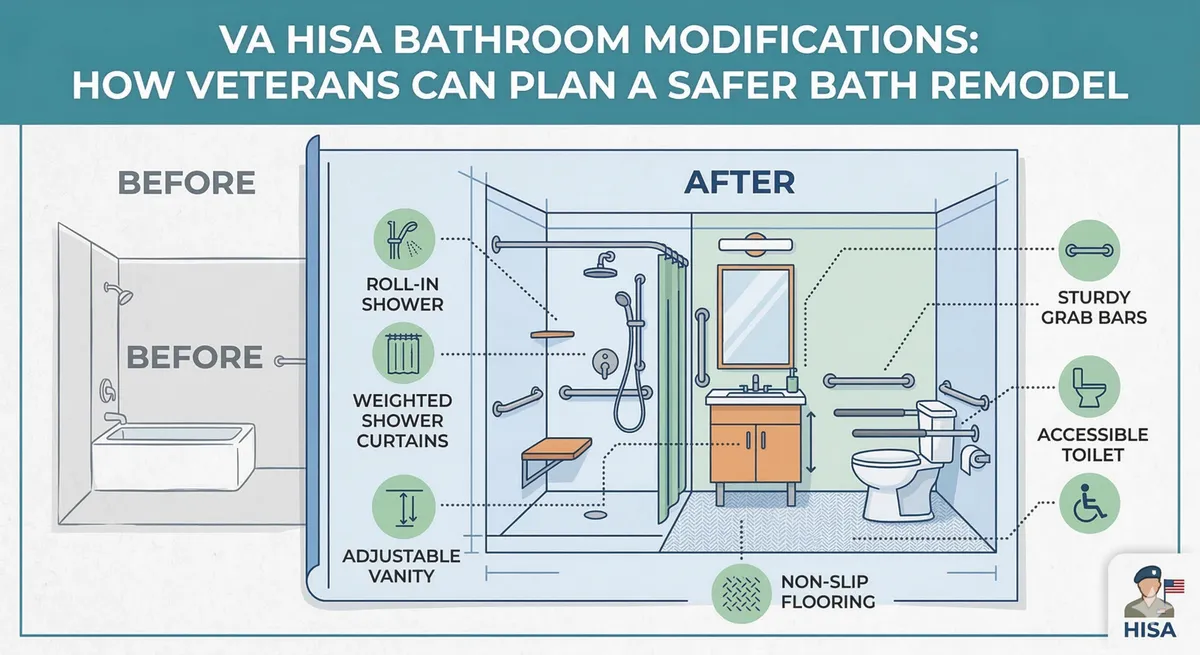
How Veterans Can Plan a Smarter Bathroom Upgrade Before They Spend a Dollar
Many families start the bathroom modification process backwards. They shop products first, compare quotes second, and then try to figure out whether the VA HISA benefit for bathroom modifications might help after the fact. However, a better strategy is to begin with medical need, layout planning, and installation path before money gets spent in the wrong place. That approach can save time, reduce frustration, and help veterans make a more useful long-term choice for aging in place.
Although every home is different, most veterans are trying to solve a few common problems. Step-over tubs can become harder to use. Small shower entries can feel less forgiving. Wet surfaces can create extra risk. Caregiver support can also become harder when the room layout is too tight. Because of that, the best project is not always the most expensive one. Instead, it is usually the one that fits the veteran’s mobility needs, the bathroom footprint, and the home’s future use.
Helpful planning mindset: Think in this order: medical need → layout fit → bathing style → installation path → funding strategy. When families reverse that order, they often create rework, delays, or features that look impressive but do not truly solve the daily problem.
Why this topic matters more than product shopping alone
A good bathroom upgrade should support safer daily bathing, easier transfers, and better long-term usability. Yet the right answer can look very different from one veteran to another. For example, some homeowners want seated soaking and deeper immersion. Others need faster entry, easier caregiver assistance, or a more open showering layout. Therefore, the smarter move is to compare the room and routine first, then match the product to the purpose.
If soaking comfort, built-in seating, and lower step-in height sound more aligned with the need, it helps to review walk in tub sizing, comfort, and safety considerations before choosing a model. On the other hand, if open access, simpler transfers, and layout flexibility are more important, it makes sense to compare accessible shower layouts, dimensions, and entry styles first. In both cases, the best decision usually comes from matching daily use to the room instead of chasing the loudest feature list.
Quick tip for veteran families
If the veteran already avoids using the current tub because entry feels unsafe, that hesitation is useful data. It often tells you more than a brochure does. In other words, daily behavior can reveal the right bathing direction faster than product marketing.
A simple decision chart veterans can use before requesting quotes
| If the main goal is… | A strong starting direction may be… | What to confirm first |
|---|---|---|
| Seated bathing, soaking comfort, hydrotherapy-style features | Walk in tub planning | Drain time, water heater capacity, seat fit, transfer comfort |
| Lower-threshold showering, quicker in-and-out routine, more open feel | Low-threshold or roll-in shower planning | Bathroom footprint, drainage, seat placement, grab bar locations |
| Caregiver assistance and easier maneuvering | More open shower layout | Clear floor space, entry width, handheld shower setup |
| Fastest path with guided help on delivery and setup | A structured installation path | ZIP-based availability, scope of work, timeline, contractor coordination |
Where white glove support can make the process easier
Some veteran households want more than a product recommendation. They also want a smoother process. That is where white glove installation guidance for walk in tubs and roll in showers can become useful. Rather than treating the purchase and the project as two separate problems, white glove support helps families think about delivery, professional installation availability, contractor-friendly options, and what happens next after a model is selected.
That matters even more when a veteran is balancing mobility changes, caregiver involvement, and timing. In many cases, families are not only buying a bathing product. They are also trying to reduce uncertainty. Therefore, having a cleaner process can be almost as valuable as the product features themselves.
Planning shortcut
If the family is unsure whether a tub or shower is the smarter fit, start with layout and transfer needs first. Then compare installation paths. Once those two variables are clear, product selection often becomes much easier.
What veterans should gather before they start the HISA conversation
Although the VA HISA benefit is tied to medically necessary home improvements, many families still benefit from doing practical prep work before they start reaching out. For example, it helps to document the current bathroom problem in plain language. Is the issue stepping over a high tub wall? Is it balance on wet surfaces? Is it the lack of seating, grab support, or enough room to maneuver? The clearer the daily challenge, the easier it becomes to discuss a targeted solution.
It is also smart to gather basic measurements, take a few photos of the room, and identify whether the home may need simple adaptation or a more involved rework. In addition, families should separate “nice to have” features from “must solve” needs. That way, the conversation stays focused on function first. The official VA HISA information page can also help you understand the benefit at a higher level before you go deeper into product planning: VA Home Improvements and Structural Alterations overview.
A practical content path that can help both traffic and conversions
From an educational SEO and AI-search standpoint, this topic works well because it connects medical-need intent, grant research intent, bathroom planning intent, and product-comparison intent in one natural path. In other words, a veteran or caregiver may start by searching for HISA help, but then they often need answers about tubs, showers, layouts, installation options, and what a realistic next step looks like. That is exactly why this topic can strengthen the new VA page while also supporting broader site authority.
It also creates stronger internal pathways. A reader who begins on a grant-related article can move naturally into deeper education on seated bathing options, accessible shower configurations, or installation planning. As a result, the site becomes more useful to both people and search systems. That usually supports better engagement, better topical reinforcement, and more qualified lead flow over time.
Suggested next-step path for readers
1. Start with the VA bathroom modification overview.
2. Compare whether a safer soaking solution or a more open shower layout fits better.
3. Review installation and delivery support options before requesting final pricing.
Final thought: the best bathroom upgrade is the one that matches real daily use
Veterans do not need more noise in this process. They need a calmer, more useful path. Therefore, the smartest place to begin is not with a random model number or a flashy feature chart. It is with the actual daily challenge, the bathroom layout, and the veteran’s preferred bathing routine. Once those pieces are clear, the HISA conversation becomes more grounded, product choices become more logical, and the installation path becomes easier to manage.
If you are helping a veteran or planning for your own home, begin by reviewing the VA HISA bathroom modifications page. Then move into the best-fit bathing path, compare the room layout, and narrow the project with confidence instead of guesswork.
Common Questions About VA Bathroom Modifications
What does the VA HISA grant cover?
The VA HISA grant helps cover medically necessary home improvements, including bathroom modifications that improve accessibility and safety for veterans.
Is a walk in tub or accessible shower better for veterans?
It depends on mobility needs, bathroom layout, and caregiver involvement. Some veterans benefit more from seated bathing, while others need easier entry and open access.
Can I use HISA for both tubs and showers?
Yes, as long as the modification is medically necessary and properly documented, different bathing solutions may qualify.
Let's make your bathroom a safer room in the house.
Talk to a real person about walk in tubs, roll in showers, installation in your area and pricing. Veteran & senior discounts included.