

A VA HISA bathroom job needs five things in the application: a VA physician's prescription, a signed VA Form 10-0103, your written itemized estimate for labor, materials, permits and inspections, a color photo of the bathroom before work, and, for renters, the owner's notarized OK. The lifetime limit is $6,800 or $2,000, depending on the Veteran's eligibility.
In short: your estimate and photos are part of the Veteran's application, so make them clean and itemized. VA pays the Veteran, not you, under the payment rule. The final payment request is due within 60 days and needs a color photo of the finished work and itemized actual costs. HISA does not cover spas, hot tubs or Jacuzzis.
What HISA is, in contractor terms
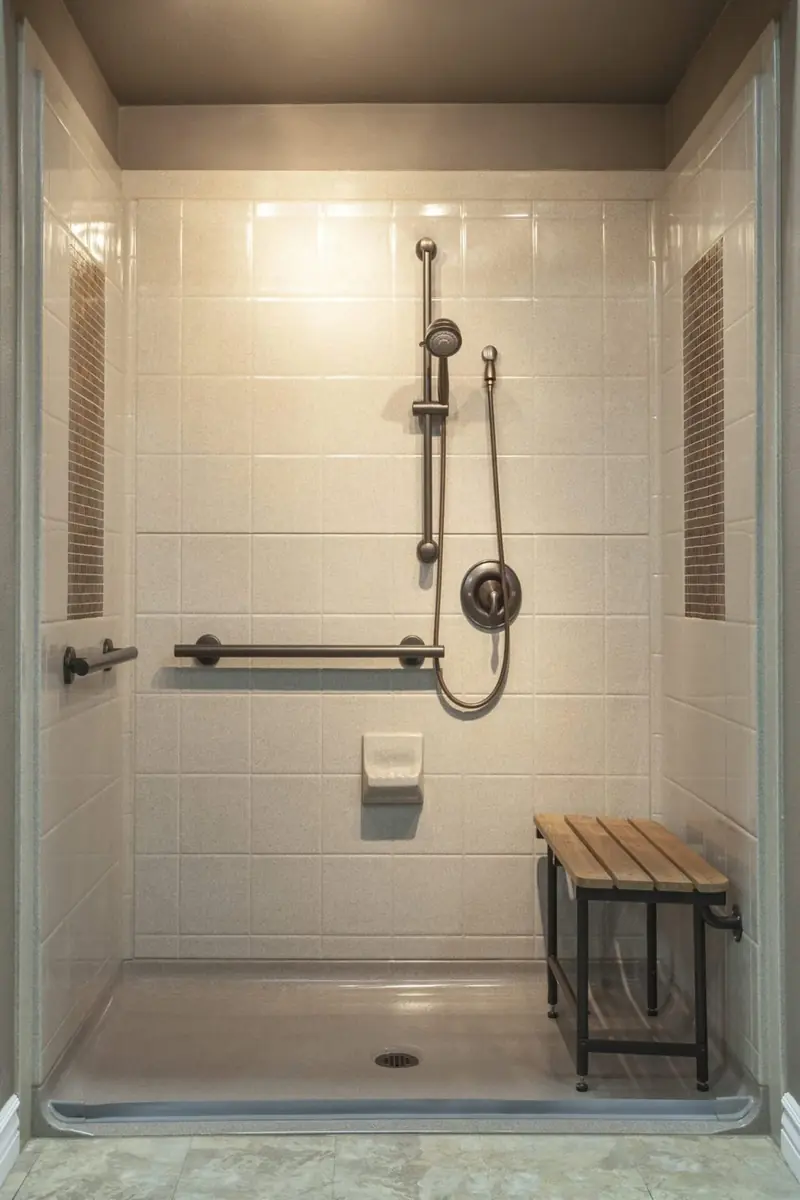
HISA stands for Home Improvements and Structural Alterations. It is a lifetime VA health benefit for medically necessary changes to a Veteran's or Servicemember's primary home. VA lists bathroom work, such as roll-in showers, among the covered project types, along with entrance ramps, lowered sinks and counters, and plumbing or electrical upgrades for home medical equipment (VA Prosthetic and Sensory Aids Service, HISA page, updated February 12, 2025).
For you, it means a funded bathroom job where the paperwork matters as much as the install. A sloppy estimate or a missing photo can stall the Veteran's application for weeks.
How much HISA can pay
HISA is a lifetime limit per beneficiary, not per project. If the Veteran already used part of it, less is left. VA's HISA page sets two limits:
| Lifetime limit | Who it applies to (VA wording, simplified) |
|---|---|
| Up to $6,800 | Work for a service-connected disability; a disability treated "as if" service-connected; or a non-service-connected disability when the Veteran has a service-connected rating of at least 50 percent |
| Up to $2,000 | A disability not covered above |
VA does not allow combining ratings to reach 50 percent, and every project must be medically justified. The Veteran should ask the local Prosthetic and Sensory Aids Service how much of the lifetime benefit is left before you price the job around it.
The application package, piece by piece
VA's HISA page lists what a complete application includes. Here is who usually supplies each piece:
| Item VA asks for | Who provides it | Contractor tip |
|---|---|---|
| Prescription written or approved by a VA physician, with a description of the project, the alternatives considered and the items to be installed, plus the medical justification | VA provider | Your scope should match the prescription. If it says roll-in shower, do not quote a walk-in tub. |
| VA Form 10-0103, Veterans Application for Assistance in Acquiring Home Improvements and Structural Alterations, completed and signed | Veteran | An advance payment is requested on this form. Ask the Veteran whether they checked it. |
| Written itemized estimate of costs for labor, materials, permits and inspections | You | Break out each line. Put jet, spa or upgrade options on separate lines. |
| Color photograph of the unimproved area | You or the Veteran | Take it straight on, in good light, before anything is moved. |
| Signed, notarized statement from the property owner authorizing the work | Owner (renters only) | Ask early. Notarizing can take a week. |
VA may inspect the site. The form itself is VA Form 10-0103; VA's forms page shows a February 2025 revision (VA.gov, About VA Form 10-0103). Always use the current one from VA.
Families asking about HISA? Our VA HISA Estimate Planner shows what the grant may cover against what the bathroom costs, and it is free for your customers to use.
See the dealer programCall 1-888-779-2284How payment works, and why it matters to you
The HISA payment rule is in federal regulation at 38 CFR 17.3130 (text on Cornell LII). The key points for a contractor:
- Advance: if the beneficiary asks for it on VA Form 10-0103, VA pays an advance of 50 percent of the total benefit authorized, within 30 days after approval. Only one advance per approved application, and it is to be used only for the approved work.
- Who is paid: the rule describes payments to the beneficiary, meaning the Veteran or Servicemember. Write your contract so your deposit and final payment do not depend on VA paying you directly.
- Final payment request: due within 60 days after approval, or within 60 days after the advance was paid. It needs a statement that the approved work is complete, a color photograph of the completed work, and itemized actual costs for materials, labor, permits and inspections.
- VA review: VA may inspect within 30 days of the request and decides within 30 days of a complete request or of the inspection.
- Amount: VA pays the lesser of the approved benefit or the actual cost, minus any advance. If actual costs come in below the advance, the beneficiary repays the difference.
- Unfinished work: no payment is made if the work is not completed. The rule protects a Veteran whose project stalled through contractor fault, such as bankruptcy or misconduct, from having the advance collected.
That 60-day clock is the reason to schedule the install as soon as approval lands, and to hand the Veteran your final itemized invoice and an after photo the day you finish.
What HISA does not cover
VA's HISA page lists items that are not covered, including spas, hot tubs and Jacuzzis, walkways to exterior buildings, exterior decking, new construction, security systems, removable equipment such as portable ramps and stair glides, and routine maintenance. On a walk-in tub quote, put jets, air systems and other spa-type features on their own lines so the Veteran can see what the grant may not pay for.
When the job is bigger than HISA
Some Veterans with severe service-connected disabilities qualify for the larger Specially Adapted Housing (SAH) or Special Housing Adaptation (SHA) grants, which have a separate application. VA lists fiscal year 2027 maximums of $133,042 for SAH and $26,654 for SHA (VA.gov disability housing grants, updated November 17, 2026). If a customer mentions these, send them to VA; do not try to manage that application yourself.
A clean HISA job, step by step
- Confirm the Veteran is working with their VA provider and local Prosthetic office, and ask how much HISA benefit is left.
- Do a site visit. Take the color before photo.
- Write an itemized estimate: labor, materials, permits, inspections, with options on separate lines.
- Give the Veteran the estimate and photo for the application. Ask if they requested an advance.
- Wait for written approval. Order the product when it lands.
- Install, pass inspection, and take the color after photo.
- Hand over a final itemized invoice of actual costs the same day, so the Veteran can file inside 60 days.
Our consumer guide to the VA HISA grant for bathroom modifications is a good page to send families who are just starting.
Frequently asked questions
Does VA pay the contractor directly for HISA?
The HISA payment rule (38 CFR 17.3130) describes advance and final payments made to the beneficiary, meaning the Veteran or Servicemember. Set your contract and deposit terms with that in mind, and ask the local Prosthetic and Sensory Aids Service if your Veteran's case is handled differently.
Will HISA pay for a jetted walk-in tub?
VA's HISA page lists spas, hot tubs and Jacuzzis as not covered. Itemize any jet or spa features separately so the Veteran knows what the grant may not cover.
What photos does VA want?
A color photograph of the unimproved area with the application, and a color photograph of the completed work with the final payment request.
Can I start work before VA approves the application?
The HISA process is built around approval first. Wait for the Veteran's written approval, and ask the local Prosthetic office before starting any work early, because the regulation ties payment to the approved application.
Do HISA jobs in your area? Become an Aging Safely Baths dealer: free to join, dealer pricing on four brands and an assigned territory.
Apply for a territoryCall 1-888-779-2284This page explains public VA rules for contractors. It is not legal or benefits advice, and VA decides every application. Rules and amounts can change; check the sources below before you rely on them.
Sources (all checked November 22, 2026)
- VA Prosthetic and Sensory Aids Service, Home Improvements and Structural Alterations (HISA), last updated February 12, 2025: https://www.prosthetics.va.gov/psas/HISA2.asp
- VA.gov, About VA Form 10-0103 (form revision February 2025): https://www.va.gov/find-forms/about-form-10-0103/
- 38 CFR 17.3130, HISA benefits payment procedures (Cornell Legal Information Institute): https://www.law.cornell.edu/cfr/text/38/17.3130
- VA.gov, Disability housing grants for Veterans, last updated November 17, 2026: https://www.va.gov/housing-assistance/disability-housing-grants/