
VA HISA vs SAH vs SHA vs TRA: Which Grant Fits a Bathroom Change?
HISA is a lifetime grant of $6,800 or $2,000 that names roll-in showers. SAH (up to $133,042) and SHA (up to $26,654) are larger FY2027 housing grants for certain serious service-connected disabilities. TRA covers a temporary family home. VA decides who qualifies. Aging Safely gives an itemized estimate and does not bill the VA.
By Zach Wennstedt, owner of Aging Safely Baths. Walk-in tubs and roll-in showers, installed in all 50 states. BBB accredited since 2012.
Updated November 22, 2026
What is the difference between HISA, SAH, SHA and TRA?
All four are VA programs that help change a home for a veteran's disability. They differ in size, in who qualifies and in what they are meant for. HISA is the smaller, medical-based benefit. SAH and SHA are larger housing grants for certain serious service-connected disabilities. TRA helps when a veteran is staying temporarily in a family member's home.
| HISA | SAH | SHA | TRA | |
|---|---|---|---|---|
| Amount | $6,800 lifetime (service-connected, or 50%+ service-connected rating). $2,000 lifetime for others | Up to $133,042 (FY2027) | Up to $26,654 (FY2027) | Up to $53,585 (SAH tier) or $9,568 (SHA tier) (FY2027) |
| Who it is for | Veterans and servicemembers whose home change is medically justified | Veterans with certain service-connected disabilities, such as loss of use of more than one limb or blindness in both eyes | Veterans with certain service-connected disabilities, such as loss of use of both hands | Veterans who qualify for SAH or SHA and are living temporarily in a family member's home |
| Home | Primary residence | You own or will own the home | You or a family member owns or will own the home | A family member's home where you stay for now |
| Main form | VA Form 10-0103 | VA Form 26-4555 (online apply link) | VA Form 26-4555 (online apply link) | Ask VA. Tied to SAH or SHA eligibility |
| Who handles it | VA Prosthetic and Sensory Aids Service | VA housing grants (VA.gov) | VA housing grants (VA.gov) | VA housing grants (VA.gov) |
The HISA figures come from the VA prosthetics office page. The SAH, SHA and TRA figures are the FY2027 maximums on VA.gov. VA.gov says the maximums may be adjusted each year, so check them before you plan.
Who qualifies for each one?
HISA
Veterans and servicemembers, for work on the primary residence, when the project is medically justified. The $6,800 limit applies when the disability is service-connected, treated as if it were, or non-service-connected with a service-connected rating of at least 50 percent. VA says percentages cannot be combined. Everyone else is limited to $2,000.
SAH
You own or will own the permanent home, and you have a qualifying service-connected disability. VA.gov lists examples: ALS, loss or loss of use of more than one limb, blindness in both eyes, certain severe burns, and loss of use of one leg or foot after September 11, 2001. That last group is limited to 120 grants each fiscal year.
SHA
You or a family member owns or will own the permanent home, and you have loss or loss of use of both hands, certain severe burns, or certain respiratory or breathing injuries.
TRA
You are living temporarily in a family member's home that needs changes, you do not have to own it, and you qualify for an SAH or SHA grant.
VA decides eligibility. Call VA or a VA-accredited representative to learn which one fits you. Aging Safely cannot decide it.
What can each one cover in a bathroom?
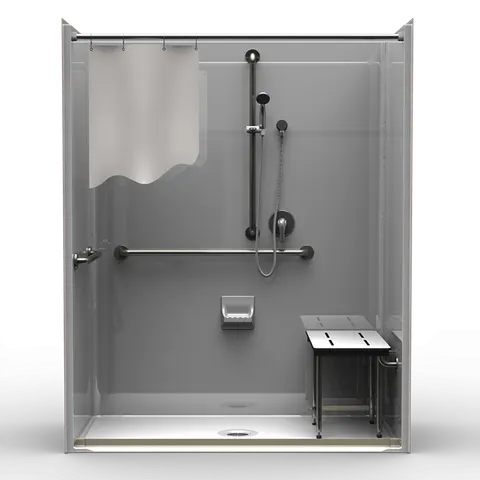
HISA is the one that names bathrooms. Its covered items include essential bathroom facilities, such as roll-in showers, and accessible kitchen or bathroom sinks and counters. It also covers plumbing or electrical upgrades needed for home medical equipment. HISA excludes spa, hot tub and Jacuzzi-type tubs, as well as routine maintenance. That is why a roll-in shower is the usual HISA bathroom project, and why a tub with jets or a soaking feature is a hard fit.
SAH and SHA pay to build, buy or change a permanent home to fit your disability. VA.gov gives ramps and wider doorways as examples. It does not name bathrooms or roll-in showers on that page, and it points to a housing design handbook for options. So ask your VA contact whether a bathroom change fits your grant. TRA works the same way, for a temporary home.
VA does not say on its HISA page whether it pays the vendor or repays the veteran. The HISA form includes an advance payment request option. Confirm the payment method with your prosthetics office before you order anything.
What forms and papers do I need?
For HISA, the VA prosthetics page lists:
- A prescription from a VA physician, or one a VA physician approves, with your details, a project description, the diagnosis and the medical reason.
- A signed and completed VA Form 10-0103.
- For renters, a signed and notarized statement from the owner approving the work.
- A written, itemized cost estimate covering labor, materials, permits and inspections.
- A color photo of the unimproved area.
VA may also inspect the site. For SAH, SHA and TRA, VA.gov points to an online application using VA Form 26-4555, and says you can also apply by mail or in person. The page does not list other form numbers.
What does Aging Safely do, and not do?
We are a supplier and installer. We are not the VA, and we are not affiliated with it.
- We do: give you an itemized written estimate you can submit yourself. Our HISA estimate tool builds one and lets you print a summary for your VA provider or therapist.
- We do not: file your application, decide eligibility, promise approval, or bill the VA for you.
- Installation: our white-glove installation is available in all 50 states, and we also ship supply-only products.
How payment works with Aging Safely. 60% down (or the lower limit where state law sets one) on all white-glove full installations. 100% at order on supply-only made-to-order products. These terms apply to VA HISA and insurance cases too.
That means you pay us on those terms even when a VA grant is involved, then you take your paid invoice back to VA if it repays you. A veteran waiting on an approval can plan the timing with us first. Call and we will talk it through.
Where do I go for the full HISA walkthrough?
This page compares programs. Our main guide is VA HISA grant for bathroom modifications, and the HISA bathroom planning guide and VA grant roll-in shower page go deeper. For every way to pay, including other help, see paying for a walk-in tub or roll-in shower.
General information only, not legal or benefits advice. VA makes every eligibility and payment decision.
Frequently asked questions
What is the difference between HISA and SAH?
HISA is a smaller, medical-based benefit of $6,800 lifetime for service-connected disabilities, or $2,000 for others. SAH is a larger housing grant, up to $133,042 in FY2027, for veterans with certain serious service-connected disabilities who own or will own the home. They use different forms and are decided separately.
Does the VA pay for a walk-in tub?
HISA excludes spa, hot tub and Jacuzzi-type tubs, so a tub with those features is a hard fit. HISA does cover essential bathroom facilities such as roll-in showers when medically justified. Ask your VA prosthetics office what it will approve for your case.
How much is the HISA grant?
HISA is a lifetime benefit of $6,800 for a service-connected disability, a disability treated as service-connected, or a non-service-connected disability with a service-connected rating of at least 50 percent. For other disabilities the lifetime limit is $2,000. VA does not combine percentages.
What are the FY2027 SAH, SHA and TRA limits?
VA.gov lists up to $133,042 for SAH and up to $26,654 for SHA. TRA is up to $53,585 for the SAH tier and up to $9,568 for the SHA tier. The page was updated November 17, 2026 and says maximums can be adjusted each year.
Does Aging Safely file the VA paperwork for me?
No. We give you an itemized written estimate that you can submit yourself. We do not file your application, decide eligibility, promise approval or bill the VA. VA makes every decision. Our payment terms apply to VA cases too: 60% down (or the lower limit where state law sets one) on white-glove installations and 100% at order on supply-only made-to-order products.
Do I pay first or does the VA pay the contractor?
The VA HISA page does not say whether VA pays the vendor or repays the veteran. The HISA form has an advance payment request option. Ask your VA prosthetics office before you order. With Aging Safely, you pay on our standard terms, then submit our paid invoice if VA repays you.
Can I use more than one VA grant?
VA.gov says grant money can be used up to six separate times over a lifetime, and unused funds can carry forward. We cannot tell you whether you can combine HISA with another grant. Ask VA directly before you plan around two grants.
Sources
- VA.gov, Disability housing grants: SAH, SHA, TRA (FY2027 amounts; page updated Nov. 17, 2026)
- VA Prosthetic and Sensory Aids Service, Home Improvements and Structural Alterations (HISA) (page updated Feb. 12, 2025)
Last checked November 22, 2026. Programs and tax rules change. Confirm with the agency, your plan or a tax professional before you rely on them.
Questions about your bathroom? Talk to a real person.
Open 7 days, 7am to 8pm Mountain. Call, or ask us to call you back.